

Local businesses in the modern hyper-connected digital world face intense competition to be visible in the communities. It may make or break your business, whether you are operating a small local cafe, a dental office, or a house repair company, as showing up in local search results is the key to success. Knowledge about local SEO ranking factors is no longer a choice; it is a must to survive and grow.
It is a detailed guide that will take you through all the information about the factors of local SEO ranking, including Google My Business optimization and technical details that affect your visibility. We will discuss effective tactics, practical checklists, and tips and tricks of successful business people to make your business appear on top of the local search results and get more customers in your neighborhood.
What Is Local SEO?
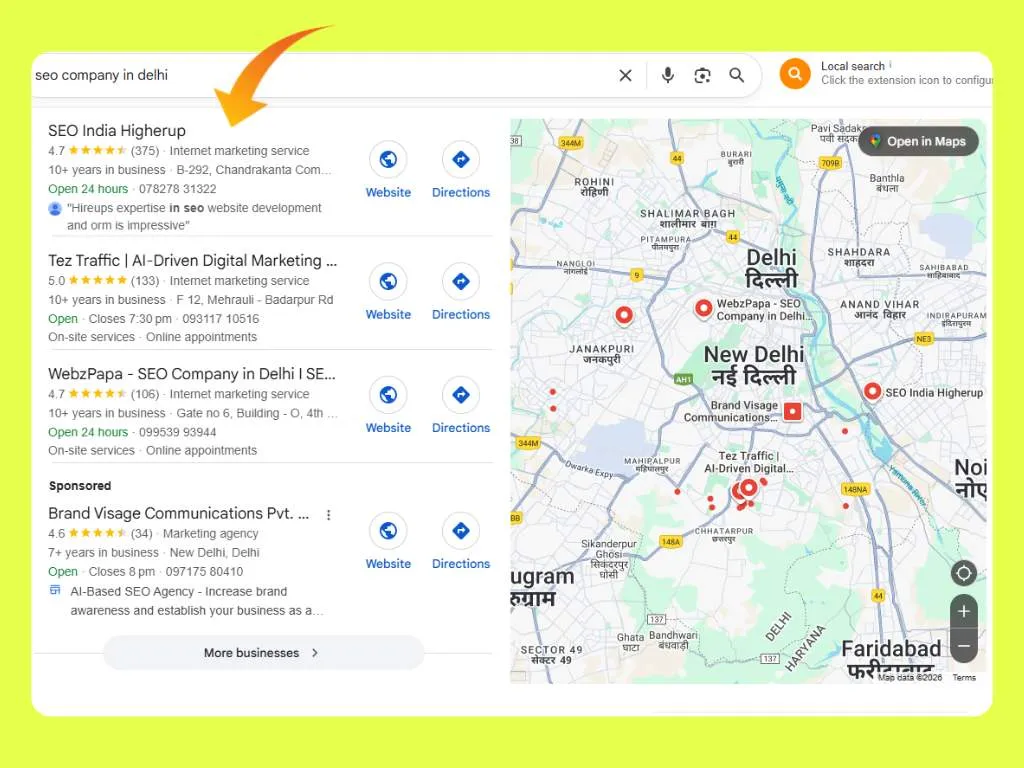
Local SEO refers to the act of optimization of your online presence to appeal to customers in a given geographical location. Instead of reaching all audiences worldwide as traditional SEO does, local SEO aims at being displayed in location-based searches, such as those that include ” plumber near me or best pizza in downtown. It entails optimization of your Google Business Profile, local citation, getting reviews, and location-specific content.
Local SEO links your business to local customers who are already searching online to know more about your products or services, and thus local SEO is one of the most economical marketing tools that you can use to market your business in a brick-and-mortar store, as well as businesses in service areas.
Why Local SEO Matters for Businesses
- Secures High-Intent Customers: When customers search locally, they show immediate purchase intent and 76% of consumers visit a business within 24 hours of the search.
- Mobile-First Discovery: More than 60% of local recommendations occur on a mobile device and customers want to get immediately relevant and instant results.
- Competitive Advantage: Small firms would be able to overpower bigger competitors because it would be localized and community-oriented.
- Cost-Effective Marketing: Local SEO gives greater ROI as compared to conventional advertising because it targets customers who are willing to purchase.
- Trust Building: The local search presence including the reviews and the correct information is building credibility within your community.
- Drives Foot Traffic: Optimized local presence is a direct conversion of online searches to in-store visits and phone calls.
How Local SEO Ranking Factors Impact Visibility
- Search Algorithms Preferences: Google implements certain cues such as the distance and relevance to rank the businesses in results of local packs.
- Map Pack Dominance: The three leading local results have 93% of the clicks and ranking factors are crucial to rankings.
- Consumer Decision Journey: 88 percent of consumers rank factors such as reviews and photos before visiting and affect their purchasing decision.
- Voice Search Optimization: Voice search results are chosen based on factors of local relevance, such as Hey Google, find restaurants nearby.
- Multi-Platform Presence: NAP (Name, Address, Phone) that is consistent across platforms is an indication that this company is credible to search engines.
- Competitive Differentiation: Oxygenation in all local SEO ranking factors assists you to be unique in the crowded markets.
Top Local SEO Ranking Factors – 2026 Google Insights
Factor #1: Google My Business / GBP Factors
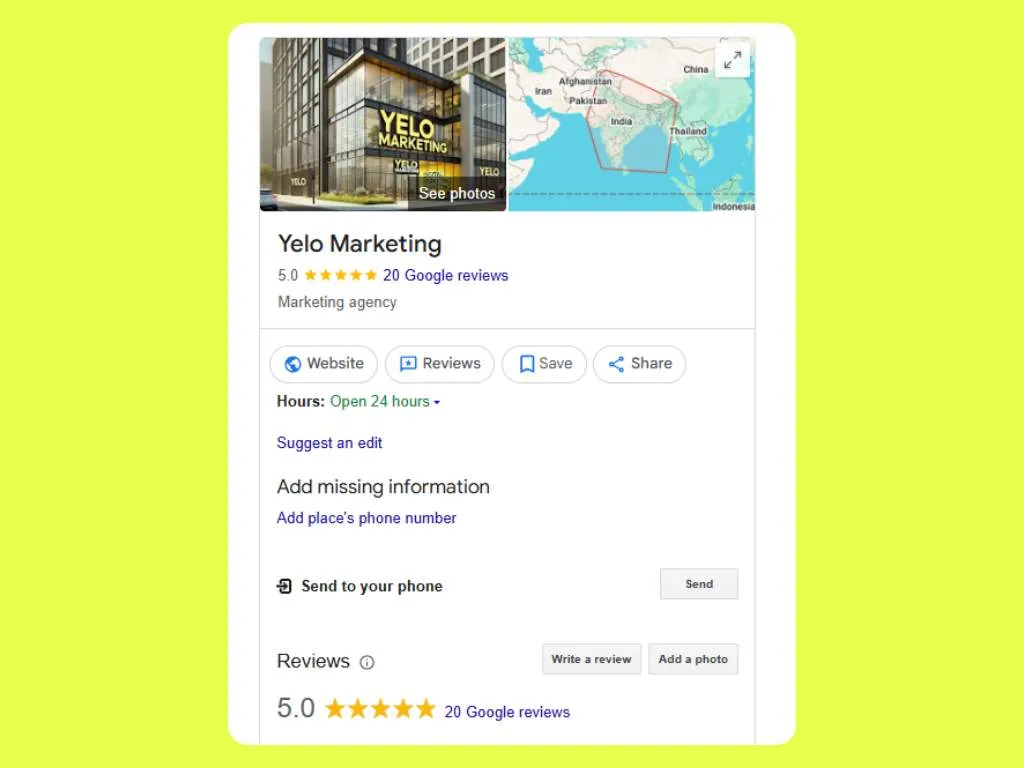
Your Google Business Profile is your online shop window in the Google ecosystem that promotes key business data right in search results and Google maps. It is the most powerful component in your local visibility plan of ranking factors and serves as the basis of local visibility.
Google values full, proper and updated profile and gives rewards to businesses that maintain an active profile. A GBP should be optimized to get a high possibility of being included in the desired local pack.
Why It Matters for Local Rankings: Primary local visibility driver
How Google Evaluates This Factor:
- Profile completion percentage
- Information accuracy verification
- Update frequency tracking
- User engagement metrics
How to Optimize This Factor:
- Complete every profile section
- Verify business information regularly
- Post weekly updates
- Add high-quality photos
Common Mistakes to Avoid: Incomplete or outdated information
Factor #2: On-Page SEO Elements

On-page local search incorporates everything on your site that indicates that you are relevant to local searches. This involves title tags containing location modifiers, locally-oriented content, maps embedded in the pages and service area pages. These factors assist Google to not only know what you do, but also where.
Local keyword placement in all areas of content coupled with schema markup will provide a strong signal in your local SEO plan of ranking factors that help not only to rank but also to greatly increase the click-through rates.
Why It Matters for Local Rankings: Signals geographic service areas
How Google Evaluates This Factor:
- Location keyword usage
- Content quality assessment
- Schema markup validation
- User experience signals
How to Optimize This Factor:
- Include city names naturally
- Create location-specific pages
- Implement LocalBusiness schema
- Optimize meta descriptions
Common Mistakes to Avoid: Keyword stuffing location terms
Factor #3: Off-Site & Citations
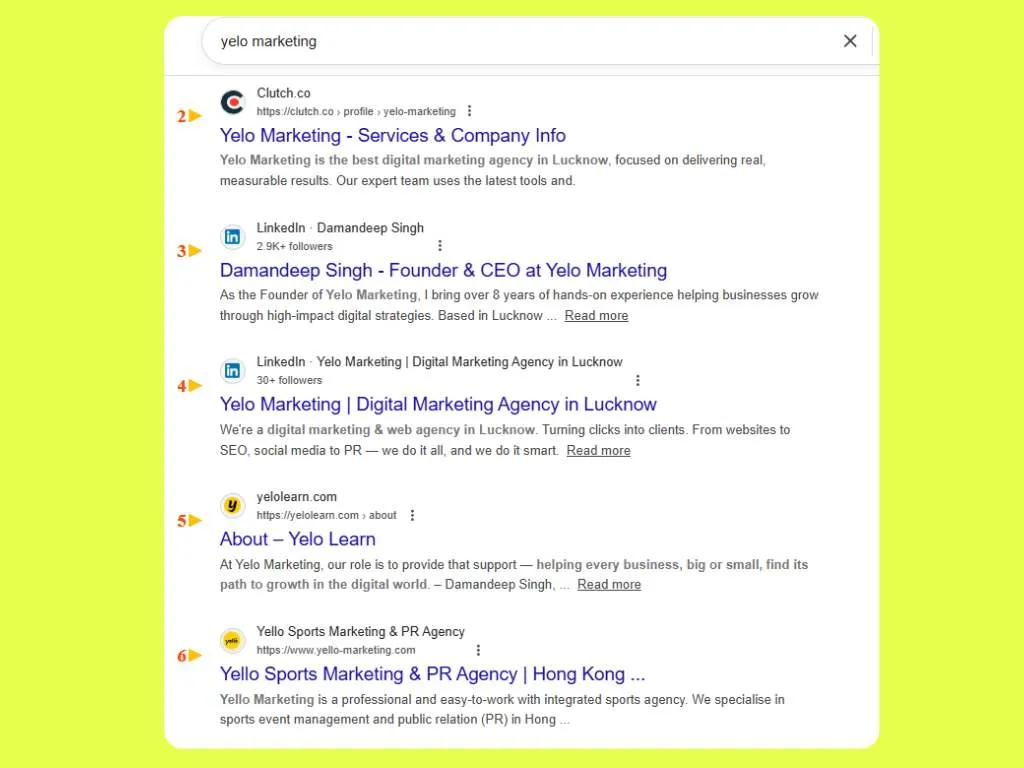
Online referrals to your business name, address, and phone number in directories, websites, and platforms are called citation. An even representation of citations throughout the internet confirms your business to Google. The key sources of citation are Yelp, Yellow pages, industry-related directories, and local chamber of commerce.
The correctness and reliability of this citation are important in your plan of local SEO ranking factors because these search engines will be misled by conflicting information, and you will lose credibility.
Why It Matters for Local Rankings: Validates business authenticity
How Google Evaluates This Factor:
- NAP consistency checking
- Citation source authority
- Geographic relevance scoring
- Data aggregator verification
How to Optimize This Factor:
- Claim all directory listings
- Ensure NAP consistency
- Target industry directories
- Monitor citation accuracy
Common Mistakes to Avoid: Inconsistent business information
Factor #4: Reviews & Reputation
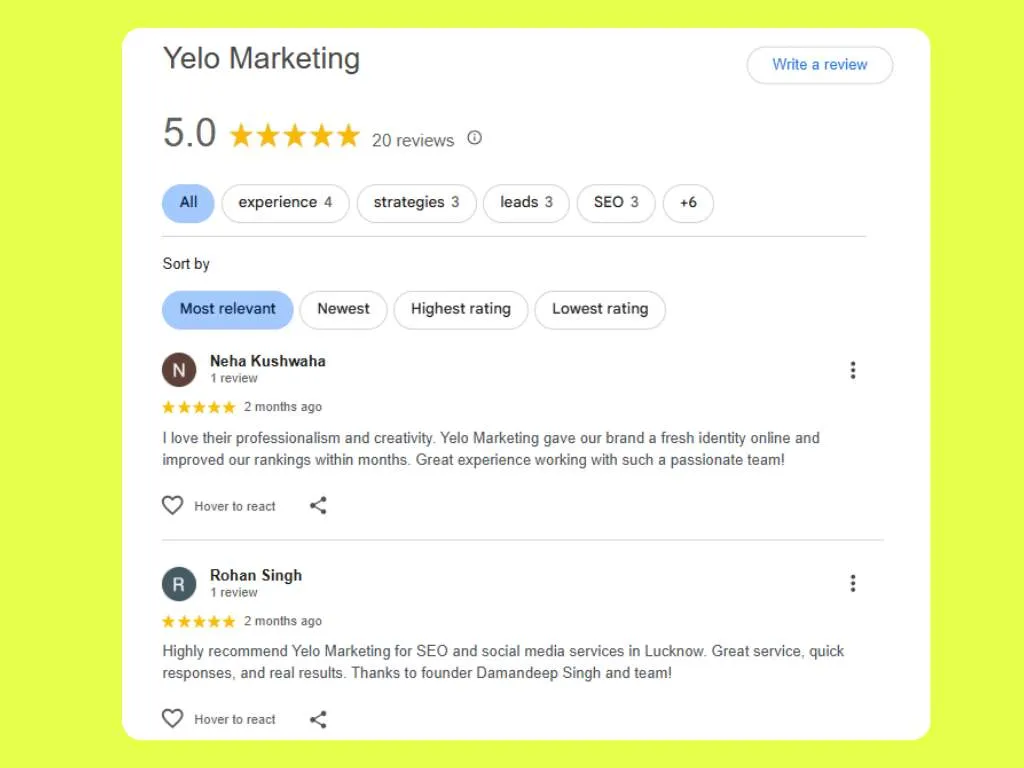
Reviews by customers are strong trust indicators and they affect search performance as well as consumer patterns. Google does not only consider the number and quality of reviews, but also recency, response rate, and platform diversity also. Relevant reviews with keywords make your business more local, whereas a steady stream of reviews proves the activity of the businesses.
The management of your review profile is an important aspect of any plan of local SEO ranking factors since reviews have a direct influence on your local pack positions and conversion rates.
Why It Matters for Local Rankings: Builds trust and credibility
How Google Evaluates This Factor:
- Review volume counting
- Star rating averaging
- Recency factor weighting
- Response rate measuring
How to Optimize This Factor:
- Request reviews systematically
- Respond to all feedback
- Monitor multiple platforms
- Address negative reviews
Common Mistakes to Avoid: Buying or faking reviews
Factor #5: Backlinks & Authority
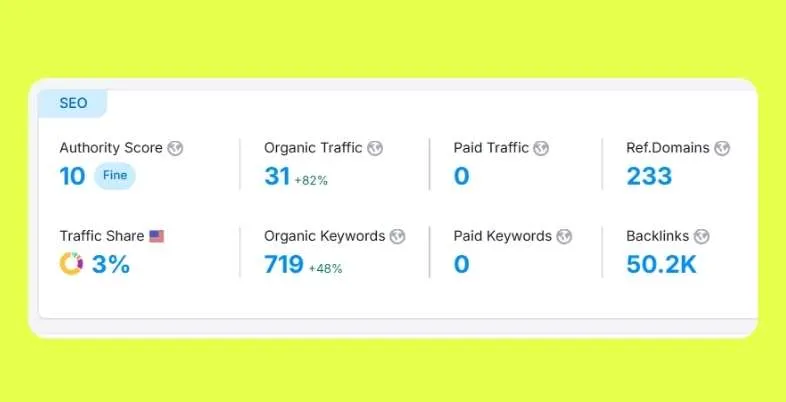
Authority local backlinks through authoritative local websites are an indication to Google that your business is a reputable member of society. These local news links, business associations links, educational institutions links, and complementary business links are very valuable in local rankings.
Quality is more important than quantity; one connection with a reputable SEO company can outdo dozens of low-end directory listings. Strategic link building to build the local authority is a key component of your local SEO ranking factors plan.
Why It Matters for Local Rankings: Demonstrates community authority
How Google Evaluates This Factor:
- Link quality assessment
- Local relevance scoring
- Anchor text analysis
- Domain authority weighting
How to Optimize This Factor:
- Pursue local partnerships
- Sponsor community events
- Guest post locally
- Join business associations
Common Mistakes to Avoid: Focusing on quantity only
Factor #6: User Behavior & Engagement
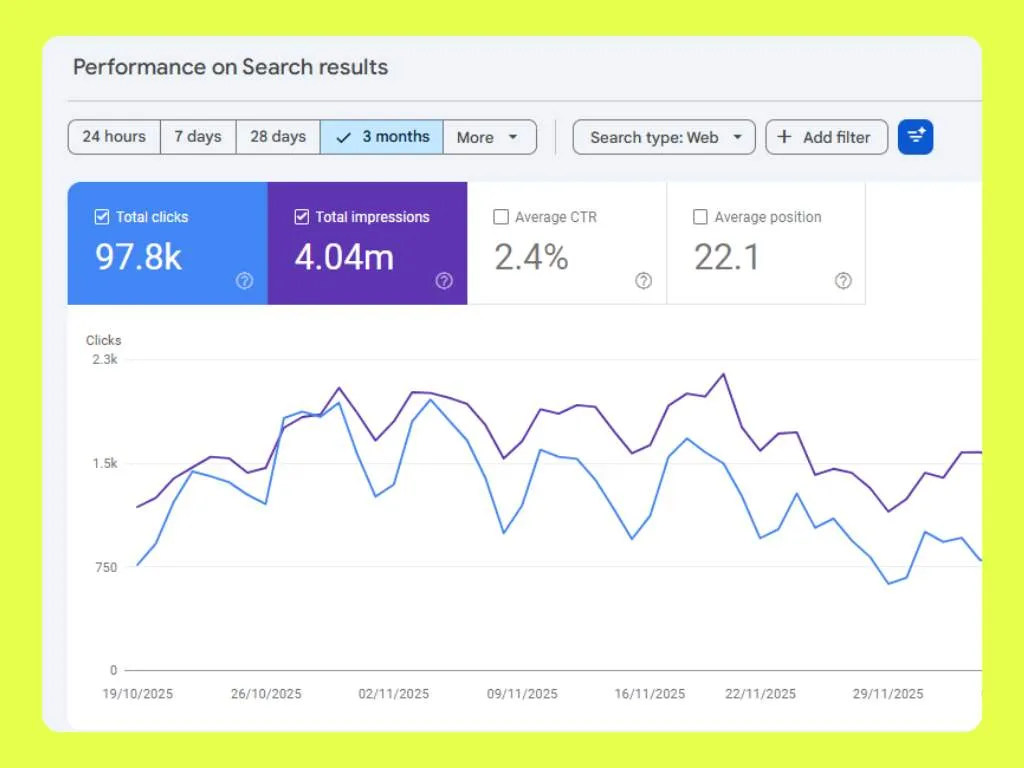
Google monitors the user engagement with your business listing and website and applies behavioral cues to measure relevance and satisfaction. The measures used are click-through rate, time on site, bounce rate, and conversion actions that are used to gauge user satisfaction. Increased activity indicates that your business provides what the searchers require, and it will help get to the top.
Mobile-friendliness, page speed, and effective calls to action all impact engagement metrics, so user experience optimization is an essential element of your plan to improve your local SEO ranking.
Why It Matters for Local Rankings: Measures user satisfaction
How Google Evaluates This Factor:
- Click-through rate tracking
- Bounce rate monitoring
- Dwell time measurement
- Conversion signal detection
How to Optimize This Factor:
- Improve page speed
- Create compelling titles
- Enhance mobile experience
- Add clear CTAs
Common Mistakes to Avoid: Ignoring mobile optimization
Factor #7: Technical Local SEO
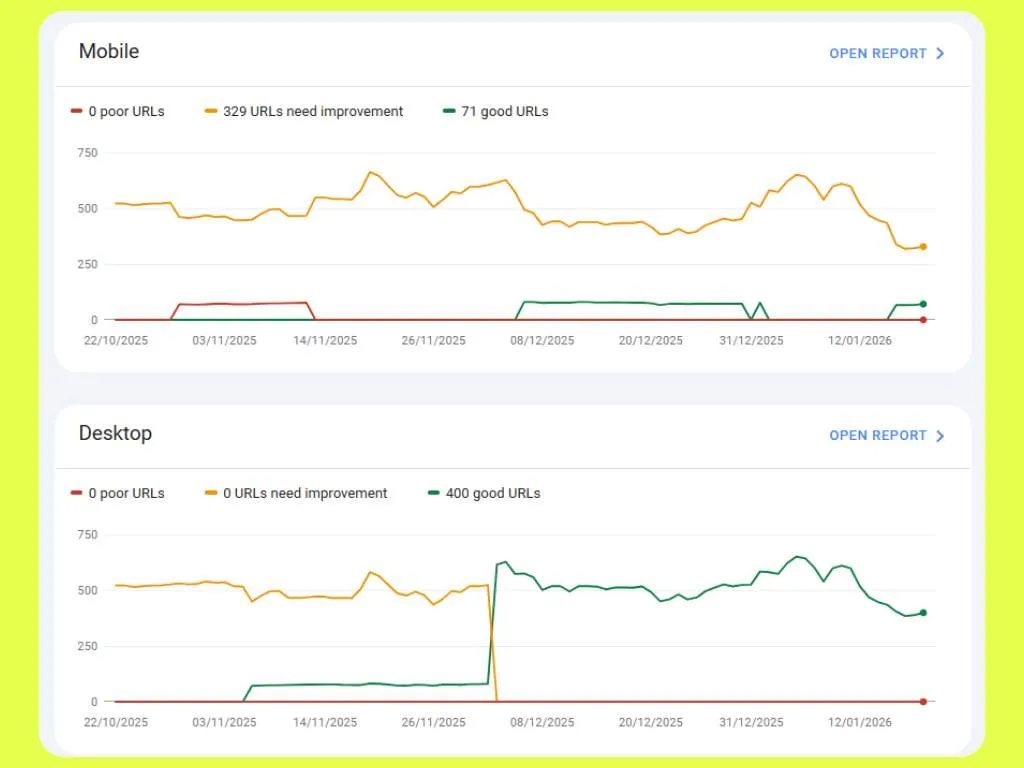
Technical SEO establishes the framework that enables search engines to effectively crawl, comprehend, and index your local data. These are schema markup of business data, XML sitemaps, correct URL structure, mobile optimization and site speed. The technical aspects make it possible for Google to make your location data effective in processing your location data and cater to your business in relevant searches.
However, as a support factor in an effective plan to rank factors of local SEO optimisation, technical optimisation is usually paid little attention to, and it helps avoid ranking barriers.
Why It Matters for Local Rankings: Enables proper indexing
How Google Evaluates This Factor:
- Schema markup validation
- Mobile-friendliness testing
- Page speed scoring
- Crawlability assessment
How to Optimize This Factor:
- Implement structured data
- Optimize site speed
- Ensure mobile responsiveness
- Fix crawl errors
Common Mistakes to Avoid: Neglecting mobile performance
Factor #8: Proximity & Location Signals
Proximity is the measure of how near your business is to the searcher- one of the most basic local ranking factors of Google. Google relies on device location, IP addresses, and search query context to identify proximity. Location-based searches tend to favor businesses that are physically nearer to the searchers.
Although the location you are in cannot be changed, you can optimize service area pages and leverage location-based content to capture searches in targeted regions. Learning how proximity is used to improve your local SEO ranking factors plan is a good way to establish achievable ranking expectations.
Why It Matters for Local Rankings: Prioritizes nearby businesses
How Google Evaluates This Factor:
- Physical distance calculation
- Service area verification
- Searcher location detection
- Query intent analysis
How to Optimize This Factor:
- Define service areas
- Create neighborhood pages
- Use location modifiers
- Optimize for “near me”
Common Mistakes to Avoid: Hiding actual location
Google Business Profile (GBP) Ranking Factors
1. GBP Completeness & Accuracy
Google also favors those businesses that submit comprehensive and correct information in all GBP sections. This contains the business name, address, phone number, site, hours, services and attributes. Each completed field enhances the authority of your profile and increases the possibilities to meet the search of a user. It is also important to be accurate, as misinformation will hurt the trust and even cause a suspension.
Periodic updates are a signal of active management, and this factor positively affects your local SEO ranking plan because it demonstrates the business’s credibility and its ability to be trusted by Google and prospective clients.
Why It Matters for Local Rankings: Maximizes matching opportunities
How Google Evaluates This Factor:
- Completion percentage calculation
- Data verification checks
- Consistency cross-referencing
- Update frequency monitoring
How to Optimize This Factor:
- Fill every available field
- Update hours seasonally
- Add business description
- Specify service areas
Common Mistakes to Avoid: Leaving sections blank
2. Business Categories & Attributes
The primary category informs Google of the basic business of your business, whereas the secondary category and attributes give detailed information about what you offer. The choice of the right categories would be crucial, as it defines what searches lead to your business listing. Google provides hundreds of categories, and the narrowest and most specific ones directly influence the visibility.
Features such as wheelchair accessibility or outdoor seating can be used to meet a user’s specific needs. An outward category choice is a cornerstone of your local SEO ranking variables plan.
Why It Matters for Local Rankings: Determines search relevance
How Google Evaluates This Factor:
- Primary category matching
- Secondary category relevance
- Attribute accuracy verification
- Category specificity assessment
How to Optimize This Factor:
- Choose precise categories
- Add relevant attributes
- Avoid overly broad categories
- Update as services evolve
Common Mistakes to Avoid: Selecting irrelevant categories
3. Photos & Content Updates
The user engagement and trust levels are suddenly high with visual content; businesses that consistently add pictures are getting 42% more direction requests and 35% more clicks on their websites. Google attaches importance to fresh and quality images of your business exterior, interior, products, and team. Constant updates with offers, events, and updates indicate business activity and give more keyword prospects.
The quality, number of images, and date are all taken into consideration in ranking; therefore, visual content management is an inseparable part of your local SEO ranking factors plan.
Why It Matters for Local Rankings: Increases engagement significantly
How Google Evaluates This Factor:
- Photo quantity counting
- Image quality assessment
- Upload recency tracking
- User interaction measuring
How to Optimize This Factor:
- Upload weekly photos
- Use high-resolution images
- Post regular updates
- Showcase products/services
Common Mistakes to Avoid: Using stock photography only
4. Reviews & Ratings
Google Business Profile reviews are considered more important than any other platform reviews in the ranking of local companies. Google considers the number of reviews, the average rating, the recency, the diversity, and the business reactions. A flow of genuine reviews with diverse content indicates popularity and reliability.
Replying to reviews (negative or positive) is a great customer service and increases conversion rates. The most influential aspect of your plan of local SEO ranking factors is arguably review management, which you can have a direct effect on by interacting with customers.
Why It Matters for Local Rankings: Most influential trust signal
How Google Evaluates This Factor:
- Total review counting
- Average rating calculation
- Review recency weighting
- Response rate evaluation
How to Optimize This Factor:
- Implement review requests
- Respond within 24 hours
- Encourage detailed feedback
- Address negative reviews
Common Mistakes to Avoid: Ignoring negative reviews
5. GBP Optimization Best Practices
Full optimization of the GBP integrates all components into a unified approach that is most visible and engaging. Some best practices are to keep NAP information consistent, take advantage of every feature (Q&A, messaging, etc.), add relevant keywords to your description, and view insights to know how you are doing.
Every audit is a way to keep your profile updated with your business changes. As GBP is the foundation of local search presence, no effective local SEO ranking factors plan can afford to compromise on adhering to the best practices in the field.
Why It Matters for Local Rankings: Holistic profile strength
How Google Evaluates This Factor:
- Overall profile quality
- Feature utilization rate
- User engagement levels
- Management consistency scoring
How to Optimize This Factor:
- Enable all features
- Monitor Q&A section
- Use the messaging feature
- Track performance insights
Common Mistakes to Avoid: Set-it-and-forget-it approach
Moz Local Search Ranking Factors
1. How Moz Defines Local SEO Ranking Signals
Moz has carried out extensive studies that help in determining the major classes of signals that contribute to local ranking: GBP signals (25%), link signals (17%), review signals (15%), on-page signals (14%), citation signals (11%), behavioral signals (10%), and personalization (8%). This evidence-based model assists companies in working on the priority of optimization.
Knowing these weighted factors is useful in that you can prioritize your resource allocations in a strategic plan of your local SEO ranking factors plan, where you are targeting areas that will have the greatest impact first, and then being balanced on all the ranking signals.
Why It Matters for Local Rankings: Framework of data-driven prioritization.
How Google Evaluates This Factor:
- Various signal aggregation.
- Calculation of weighted factors.
- Category-specific scoring
- Competitiveness benchmarking study
How to Optimize This Factor:
- Balance all categories
- Prioritize high-impact signals
- Monitor competitor gaps
- Regular performance auditing
Common Mistakes to Avoid: Prioritizing individual factors.
2. Localized Content Importance
The production of location-based content proves the strong connection to the community and its relevance to the local search. This will involve city-specific service pages, local event coverage, neighborhood directories and content about local landmarks or issues. Local content has location keywords inherently built in and offers local value to local audiences.
It is better to be of quality than quantity–a single detailed guide to the neighborhood is a better thing than dozens of thin guides of the location. Localized content development is a strong differentiator in any all-inclusive plan of local SEO ranking factors.
Why It Matters for Local Rankings: Indicates intense local relevance.
How Google Evaluates This Factor:
- Content quality assessment
- Local keyword analysis
- Scoring of geographic relevance.
- User engagement Decision measurement.
How to Optimize This Factor:
- Create neighborhood pages
- Cover local events
- Feature local testimonials
- Build community resources
Common Mistakes to Avoid: Reproduction of the material in different places.
3. On-Page SEO for Local Pages
There should be a balance between local keywords and natural and user-friendly page content that will optimize individual location pages. Each location page must contain different title tags, description meta, and headings as well as body content with names of cities and names of neighborhoods. Add integrated Google Maps, local business schema, and location-specific imagery.
Topical relevance is improved by the internal connection between location pages and service pages. Adequate on-page optimization means that each location page is engaged, so it plays its part in the overall local seo ranking factors plan.
Why It Matters for Local Rankings: Captures location-specific searches.
How Google Evaluates This Factor:
- Title tag optimization
- Conflict of content verifying.
- Keywords relevance evaluation.
- User experience evaluation
How to Optimize This Factor:
- Customize each page
- Include location keywords
- Add local testimonials
- Embed maps naturally
Common Mistakes to Avoid: Cookie-cutter location pages.
4. Competitive Advantage in Local SERPs
Local search is highly competitive and has little visibility (usually 3 positions in the local pack). Competitive advantage requires performing well in many ranking factors at the same time and determining the weaknesses of the competitor. Competitor profile and review the counts, content strategies, and citation profiles to identify gaps that can be exploited.
Smaller businesses can be ranked higher in local results through superior optimization in such key areas as reviews, content depth, and user experience, and competitive analysis is critical as part of your local SEO ranking factors plan.
Why It Matters for Local Rankings: Limited visibility requires excellence
How Google Evaluates This Factor:
- Relative ranking comparison
- Competitive gap analysis
- Market density assessment
- User preference signals
How to Optimize This Factor:
- Conduct competitor audits
- Identify ranking gaps
- Exceed competitor standards
- Monitor SERP changes
Common Mistakes to Avoid: Disregarding competitive intelligence.
Name Three of the Local SEO Ranking Factors
Relevance
Relevance is a measure of how your business fits your searcher. Google uses relevancy based on your category of business, services offered, keywords in the content and completion of information on GBP. The high relevance to the searches for pizza near me is evidenced by a pizza restaurant whose name, categories, and description contain the word pizza. Relevance maximization will make you appear in searches that are related to what you really offer.
Why These Matter: Ensures appropriate search matching
Distance
Distance is used to mean the distance between where your business is and the searcher or the geographic area as specified in the search query. When one types a coffee shop, Google will rank companies nearest to their present location. In searches with certain localities such as coffee shops downtown, Google is targeting local businesses. Although you can not modify your physical position, you can make location pages to be optimized to service area searches.
Why These Matter: Ensures appropriate search matching
Prominence
Prominence is the level of popularity and authority of your business, both in the Internet and in real life. Google defines prominence based on such aspects as the number and quality of reviews, backlinks, citation, the number of times your brand name is searched, and awards or recognition. Older firms and those with good reputations are naturally ranked high. The establishment of prominence based on regular reputation management and PR and community relations enhances your general position in the local search greatly.
Why These Matter: Ensures appropriate search matching
Local SEO Checklist — Step-by-Step Quick Guide
| Key Metricez | What to Do |
|---|---|
| GBP Optimization | Claim & verify GBP, choose correct primary category, add secondary categories, ensure accurate NAP, set business hours, add service areas, write keyword-rich description, upload high-quality photos, post regular updates, enable messaging & Q&A |
| Citation Audit | Ensure NAP consistency, list on major directories (Google, Yelp, Bing), submit to local & niche directories, remove duplicates, update incorrect listings, check data aggregators, monitor citations quarterly |
| Reviews & Reputation | Request Google reviews, share review link, respond to all reviews, encourage detailed feedback, monitor multiple platforms, maintain 4+ star rating, handle negative reviews professionally |
| On-Page Local SEO | Optimize title tags & meta descriptions with city keywords, create location pages, add NAP on site, embed Google Maps, use internal linking, add local testimonials, optimize images with local alt text |
| Technical & Structured Data | Implement LocalBusiness schema, ensure mobile-friendliness, improve page speed, fix crawl errors, submit XML sitemap, use HTTPS, optimize Core Web Vitals |
| Backlinks & Authority | Build local backlinks, partner with nearby businesses, sponsor events, get local press mentions, join business associations, earn guest post links, monitor backlink quality |
Local SEO Mistakes to Avoid
- Mismatched NAP Data: Utilizing varied business names, addresses, or phone numbers on the various platforms disfigures Google and severely diminishes your ranking ability.
- Disregarding Reviews: Not asking, tracking, and responding to customer reviews is foregoing the most powerful local ranking factor that you can regulate.
- Keyword Stuffing: Loading content with location keys is a very poor user experience that results in Google penalty instead of ranking better.
- Selecting the wrong categories: When you select the wrong categories or too broad categories of GBP, your business will incur irrelevant searches and lose qualified leads.
- Lack of Mobile Optimization: Local search is conducted mainly through mobile gadgets so sluggish or unresponsive sites would automatically lose their ranks as well as their conversions.
- Making Clone Contents: Reproduction of similar content on different location pages are indicative of low quality to Google and does not indicate specific local relevance.
Tools for Tracking Local SEO Ranking Factors
- Google Business Profile Insights: Free in-built analytics on how customers discover your listing, what they do and how you perform against competition.
- BrightLocal: All in one solution to monitor local rankings, manage citations, review monitoring, and audit your local performance in all aspects.
- Moz Local: Controls the distribution of the citations, checks the accuracy of the listing throughout the web, and offers the insights about your visibility and presence on the local search.
- SEMrush: Provides local rank monitoring, rivalry investigation, citation administration, and GBP optimization proposals to handle local search engine optimization in total.
- Whitespark: Citation building, local rank tracking and reputation monitoring specialized with detailed reports on your performance on local SEO ranking factors.
- Google Search console: This is used to monitor the performance of your website in Google search results, detect technical problems, and which location-based searches are bringing people to your site.
Conclusion
Understanding the factors of local SEO ranking is crucial to a business that has local customers in the current competitive digital age. Whether it is optimization of your Google Business Profile, accumulation of local citations, generating genuine reviews and development of location-specific content, all these factors are key in your overall visibility. To achieve success, it is important to have a detailed local SEO ranking factors plan that considers all the factors, including technical underpinnings, on-page factors, off-site factors, and user-metric factors.
The nature of the landscape keeps changing but the basics stay the same, i.e., give correct information, offer good customer experiences, and always portray your relevance and authority as a local as well. With the strategies, checklists, and best practices of this guide in place, you are going to have a robust presence at the local level making it easier to attract more customers, bring in more foot traffic, and facilitate a sustainable business growth within your community.
FAQs
Which factors in local SEO ranking will be the most significant in 2026?
The most relevant are Google Business Profile optimization, review quantity and quality, citation consistency, localized content, local sources backlinks, and user engagement indicators such as click-through rates.
What is the time to realize the results of local SEO?
Initial improvements in most of the businesses will occur in 2-3 months, with the results of major improvements coming in 4-6 months. It might take 6-12 months of constant optimization to have competitive markets.
Is it possible to conduct local SEO without a physical address?
Yes, even businesses that do not have storefronts can be optimized to local search by specifying service areas in GBP, developing location-specific content, and creating local citations without showing addresses.
What is the number of Google reviews I must rank in order to do well?
Although there is no magic number, those businesses in the top 3 local packs will have a minimum of 50 or more reviews with ratings of above 4.0 stars and recent reviews will also be active.
How is local SEO different compared to regular SEO?
Local SEO focuses on the searches that are geographically-related and is more concerned with the distance, whereas traditional SEO is concerned with the non-location-specific searches. Compared to regular SEO, local, one focuses more on GBP, citations, and reviews.